
8 Sessions for $800
Your first 8 one-on-one sessions, starting with Session Zero — a 90-minute assessment where we test, work out what your child actually needs, and do the first session. One per new client.
Came here from the flyer? Mention DMFAM when you book. Studio or your home nearby — same price.
"Will Lifting Weights Stunt My Child's Growth?"
This is the question I get more than any other, and it deserves a real answer rather than a reassuring one.
The worry is specific: growth plates. And it is not a silly worry — growth plates are genuinely still-developing cartilage.
But the evidence points the other way. The National Strength and Conditioning Association — the body that certifies me — publishes a position statement on youth resistance training. It states plainly that there is no evidence resistance training stunts growth in children or adolescents. Across the prospective studies on youth strength training, not one growth-plate injury has been reported.
"But weightlifters are all short." The causation runs backwards. Strength training did not make them short — people built for leverage get selected into weightlifting. Nobody thinks basketball makes you tall.
The same position statement is equally clear about when youth training does go wrong, and it comes down to three things: bad technique, maxing out, and no qualified supervision. All three are avoidable, and avoiding all three is the whole job.
So here is how your child trains with me. Movement patterns first, with bodyweight and light load. Load goes up only once the movement is right. No one-rep maxes.
Sources: NSCA Youth Resistance Training Position Statement; Lloyd, Faigenbaum et al., 2014 International Consensus, British Journal of Sports Medicine.
What We Work On
Age-appropriate does not mean easy. It means correctly matched to where they are in their development, and progressed as they grow.
You Can Train Alongside Them
The studio holds two people. That turns out to matter more than I expected.
A 1-on-2 session means your teenager and you train in the same hour, both coached, each on your own program. It is priced per person — from $65 each per session before tax, against $120 for a 1-on-1. One trip, one hour of your week, two people trained.
Studio or your home, same price, if you live nearby.
It also changes something that has nothing to do with money. A teenager who watches a parent train — struggle with something, get coached through it, come back the next week — learns something about training that no coach can tell them.
If you would rather they train alone, that is completely fine. Plenty do.
See 1-on-2 PricingYou Are Welcome in the Room
Every session with a client under 18 is open to a parent. Stay for all of it, stay for the first one, or drop off and pick up — your call, no explanation needed.
You will also get a short note after the assessment: what we tested, what we found, and what the first month looks like. In plain language, not coach jargon.
I Coached a Pro, 6'8"
Isaiah Phillips — De La Salle, UAAP — trained with me for two to three years. He could not dunk when we started. He finished on a championship roster.
He was not a teenager, and I am not going to pretend he was. What matters for your child is the order of the work, and the order is the same one I used with him: find out what is actually limiting them, fix the movement, then load it. That sequence does not change with age. What changes is the loading.
Read the case notes →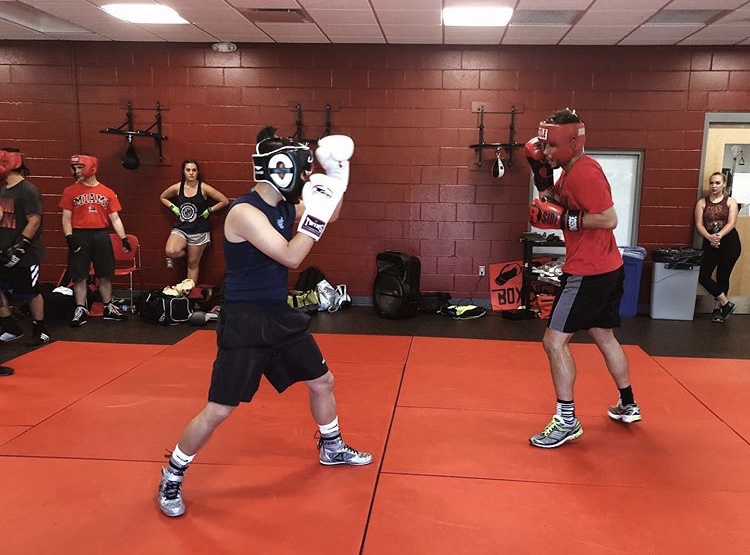
Simon Lu, CSCS
Honours Kinesiology degree from Western University, and the NSCA Certified Strength and Conditioning Specialist designation — the certification that requires a university degree to sit for, and the standard used by professional strength coaches.
Also certified through the American Council on Exercise as a Youth Fitness Specialist, which is specifically about training people who are still growing — and as a Personal Trainer through ISSA and a Level 1 Nutrition Coach through Precision Nutrition.
Eight years of competitive boxing, including time as a professional. For teenagers who want it, boxing is also on the table — real technique, and some of the best conditioning there is.
Coaching available in English, Mandarin and Cantonese.
Common Questions
Start With A Conversation
Tell me what your child wants to be able to do, and what you are worried about. Fifteen minutes on the phone, no commitment beyond that.