FREE · 25 MINUTES AT HOME
Six strength tests you can do at home, using the same methods as the US CDC and senior-fitness research. Compare the results with people the same age, and you will know what is fine and what needs work.

THE SIX TESTS
Getting out of a chair, carrying groceries, standing steady, climbing stairs. When these start to feel harder, it usually shows here before it shows up anywhere else.
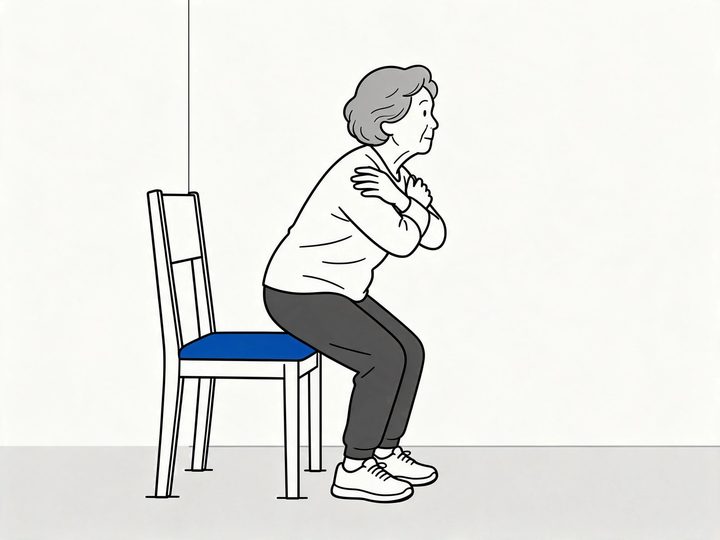
The strength to get up from a sofa, a toilet or a car seat. The US CDC uses this test to screen for fall risk.
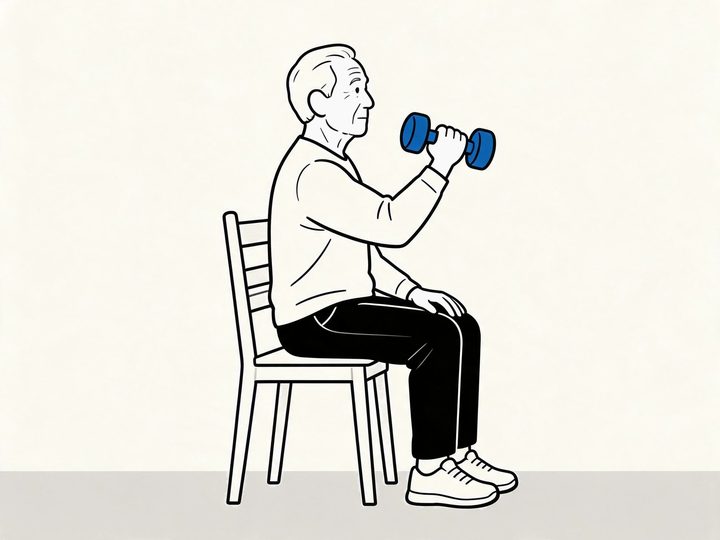
Carrying groceries, lifting a grandchild, putting things on a shelf.
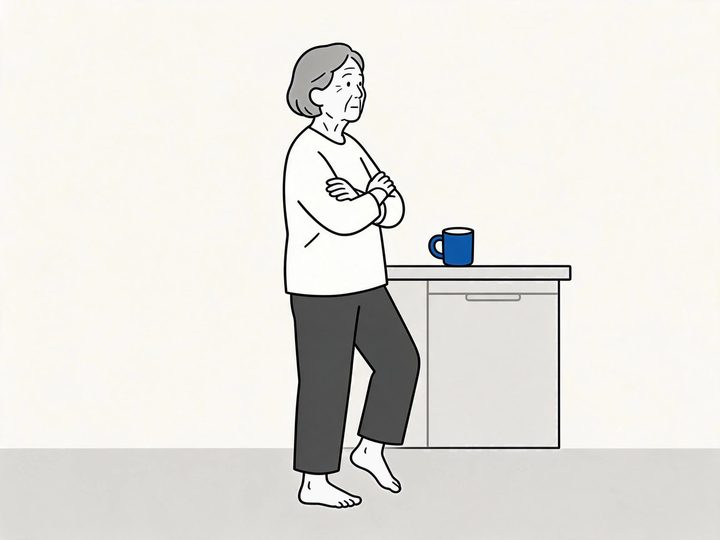
Declining balance is where many falls start. Done beside a counter, with someone nearby.
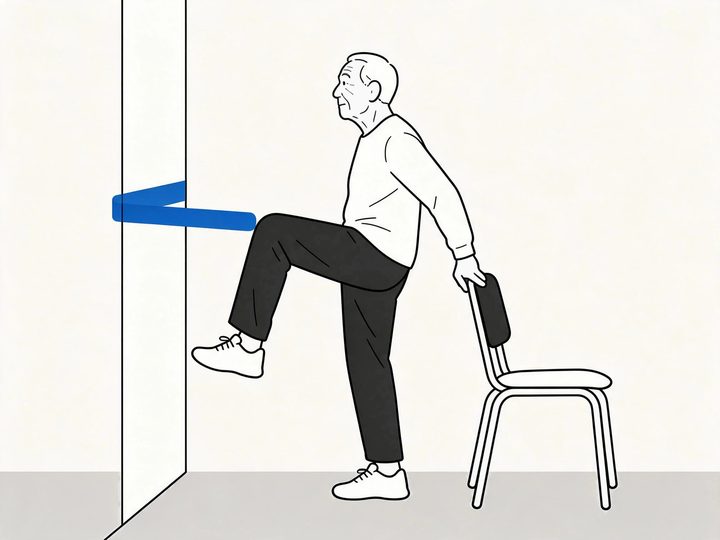
Stamina in the heart, lungs and legs. The standard stand-in when there is no room for a walking test.
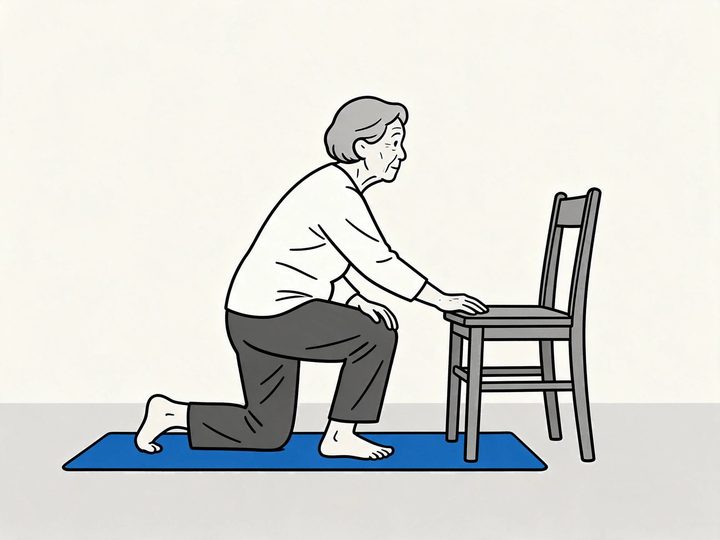
Down to the floor and back up again. It decides whether you can get up on your own after a fall.
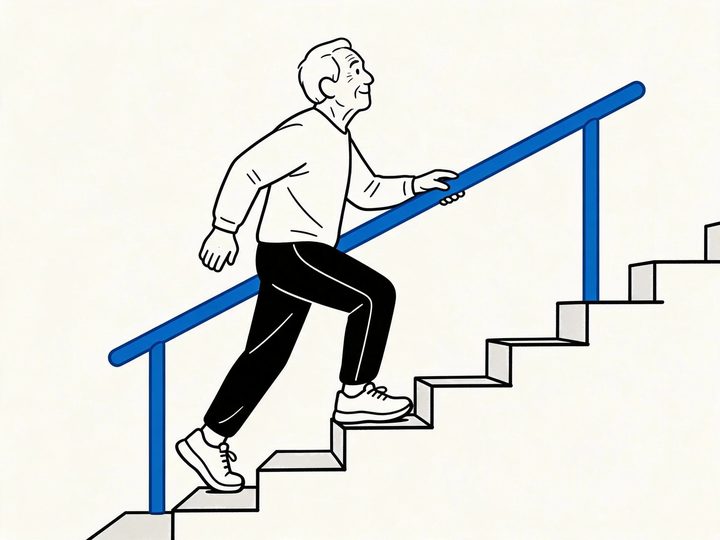
Heart, lungs and legs working together in everyday life. No stairs at home? Skip it.
WHY IT IS WORTH DOING
That is from a study that followed 1,702 adults aged 51 to 75. Balance is not a small thing.
Araújo CG et al., British Journal of Sports Medicine, 2022
Weak legs mean pushing up with the hands or throwing the body forward to stand — which is exactly the moment many falls happen.
The last page is a record sheet. Whether the numbers move tells you more than any single result.
IF THIS IS FOR YOU
This is not an exam. There is no pass or fail. It simply shows where you are today compared with people your age.
Do it with a family member beside you. Read the safety page at the front before you start, and if anything feels wrong during a test, stop — skipping a test is fine.
Six weeks later, do it again.
WHAT YOU GET
The mobile version is laid out tall with large type, for reading on a phone. The A4 print version is for printing, so you can write on the record sheet as you go. You get both.

WHO MADE THIS
Strength and conditioning coach at SAI Fitness, a private studio in North York, Toronto. Every test and every reference value in this guide comes from published research. I turned it into something you can do at home.
Honours B.A. in Kinesiology, Western University · NSCA Certified Strength and Conditioning Specialist (CSCS) · 8+ years of competitive boxing, including time as a professional · English, Mandarin, Cantonese
QUESTIONS
The guide opens with a “check with your doctor first” list and a “stop immediately” list. With heart disease, uncontrolled blood pressure, recent surgery or a recent fall, ask the doctor first. If any test feels wrong, skip it — it does not affect the others.
No. The guide is complete and works without buying anything. I will get in touch once to make sure you received it. After that, we talk only if you want to.
Your email is so I can check you got it, and so you can reach me if the numbers do not make sense. Your phone number is optional. Your details are used for this and nothing else, and never shared.
Yes. The reference tables for tests 1 and 3 start at age 30. The others are mainly for 60 and over — if you are younger, treat today as your baseline and compare in six weeks.
Download the mobile and print versions straight away. No waiting for an email.